How can we navigate work-life boundaries in isolation?
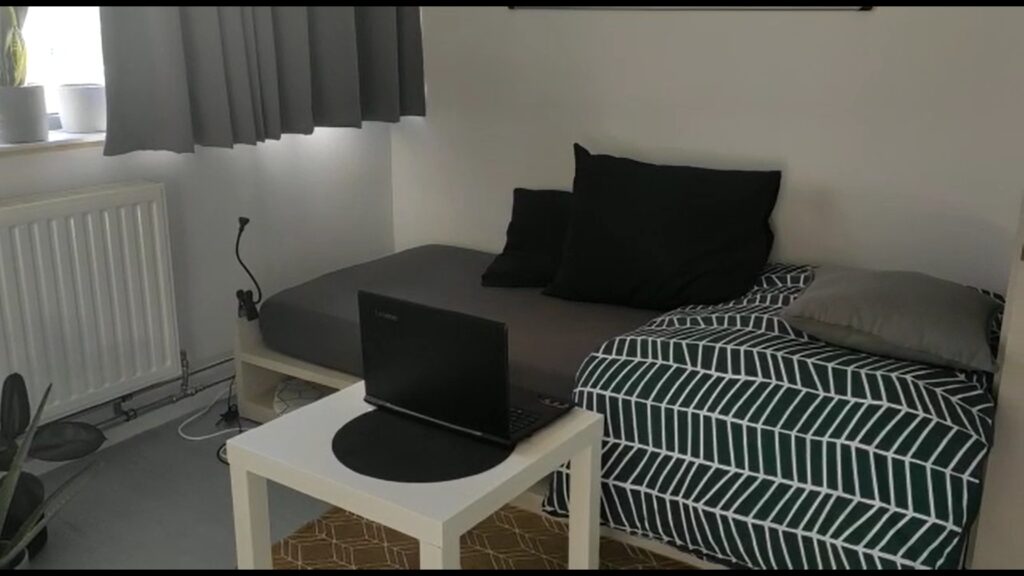
At the height of the COVID-19 pandemic, many university students in the Netherlands (who were living alone in small studios) found it difficult to separate work and leisure time in spaces that suddenly had to serve both purposes.
Our team set out to explore how students maintained (or blurred) the boundaries between study and leisure time during lockdown.
Through qualitative research, we identified behavioural cues and strategies that helped students to take control of their wellbeing despite being confined to their homes.
Context
This group project was completed entirely online during the 2020 global lockdown caused by the Coronavirus pandemic. As part of the Master’s course DFI Research Methodology at Delft University of Technology’s Faculty of Industrial Design Engineering, students were encouraged to focus their project on student wellbeing.
Project members
- Erika Hajdu (me)
- Lotte van der Jagt
- Loes Tielen
Supervised by
- Jeanine Mooij (TU Delft)
- Hannah Goss (TU Delft)

Approach & Methods
- Guided Video Journals (data gathering through digital journaling)
- 1:1 Online Interviews
- Literature Review (Secondary research)
- Qualitative Data Analysis (Grounded Theory)
Tools
- Mural (for collaborative coding and data clustering)
- WhatsApp (for easy, low-barrier video diary submissions)
The process
First, we conducted literature research on wellbeing and remote working. Then, we invited a small group of students to keep a guided digital journal for three days. They recorded short videos before and after study sessions in which they reflected on their behaviours and choices. These entries were followed by semi-structured interviews to gain a deeper understanding of their reasoning. Finally, we analysed the material collaboratively through iterative coding and categorisation to reveal patterns in how students establish work-life boundaries.
My role in the project mainly involved research planning, conducting interviews, and analysing the findings.
Results
We found new and underused categories of environmental and behavioral cues that students use to separate work and personal life within the same physical space. These insights contribute to a growing body of interdisciplinary knowledge around wellbeing, role separation, and behavior in isolation, which is relevant not only to students but to remote workers worldwide.