Emotional first aid in modern dating
In the world of dating apps, rejection, ghosting and unpleasant encounters are everyday occurrences. However, these seemingly minor setbacks can slowly erode self-esteem and lead to emotional burnout.
Taking inspiration from Guy Winch’s book Emotional First Aid, I set out to turn helpful psychological coping strategies into tangible tools to help people deal with the hardships of seeking a partner online.
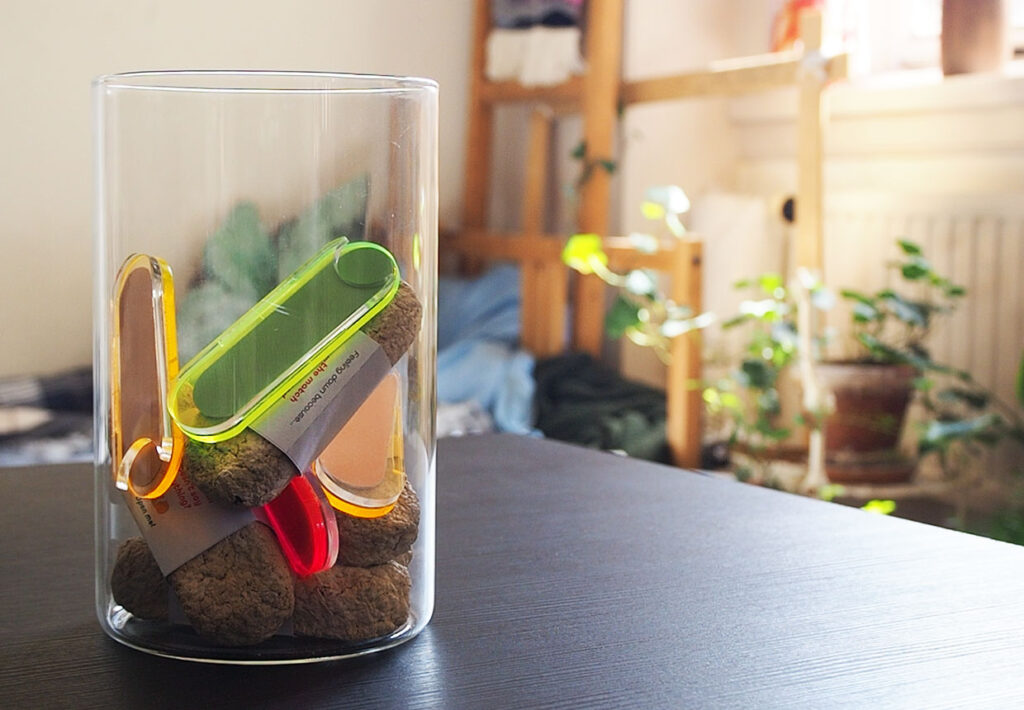
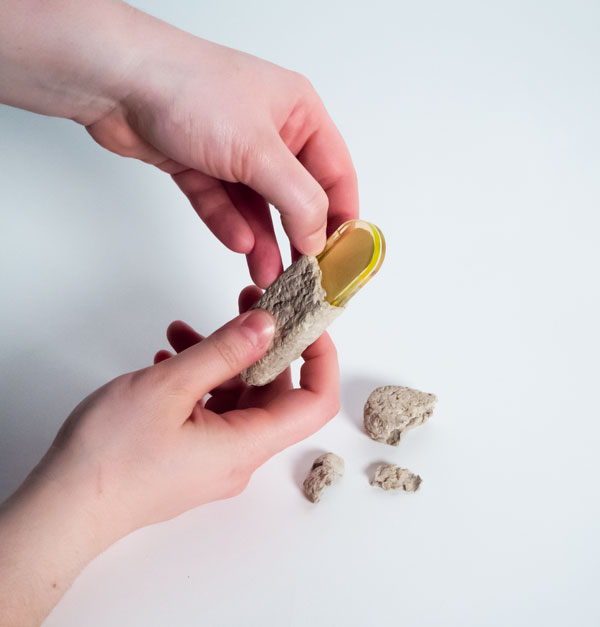
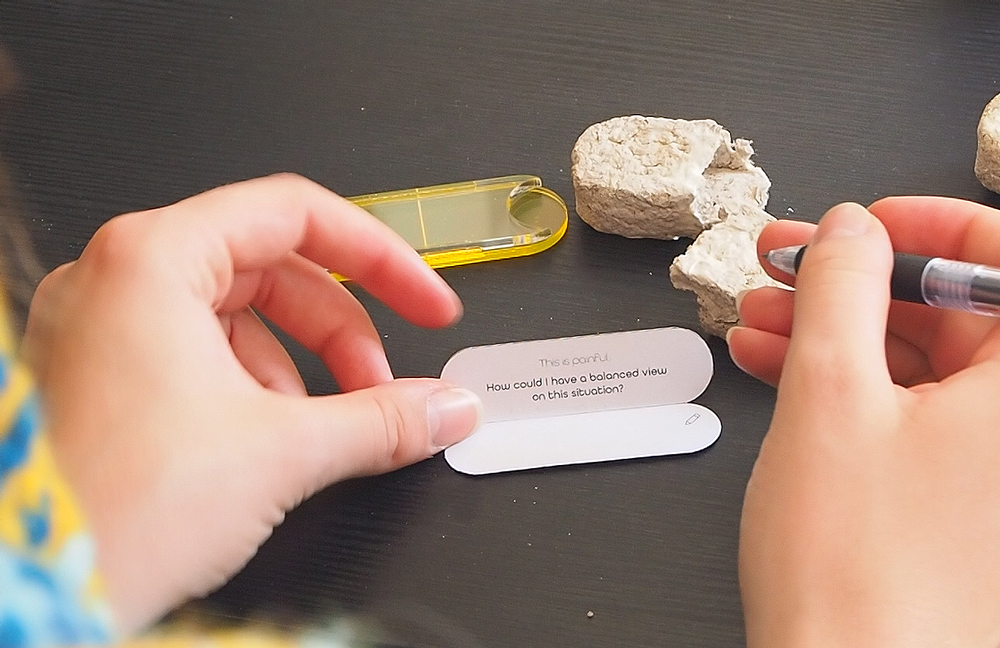
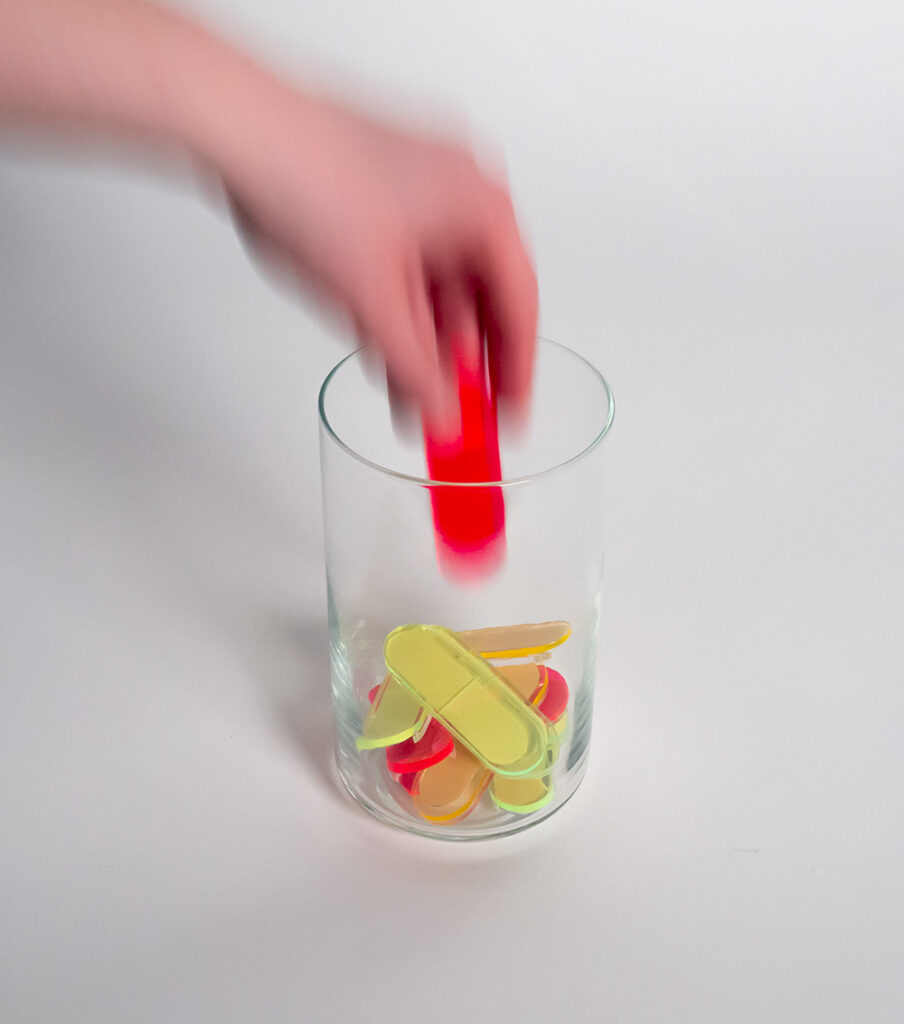
Huggle is a fictional service imagined for the dating app Tinder: a set of prompts in pill form that encourage people to be kind to themselves after everyday emotional setbacks. The aim is to help people recognise and deal with small dating disappointments before they turn into bigger emotional problems.
Context
This graduation project for the Master Design for Interaction programme at the Delft University of Technology builds on the ideas in the book Emotional First Aid by Guy Winch. The project was initiated by Hazal Ertürkan (project supervisor).
Mentors
- Pieter Desmet (TU Delft)
- Hazal Ertürkan (TU Delft)
External advisors
- Laura Sels (Ghent University)
- Tila Pronk (Tilburg University)
- Tessa Dekkers (University of Twente)
- Nils Keesmekers (Maastricht University)
- Marsha Goei (Breeze)
Approach & Methods
- User & expert interviews
- Secondary research (literature/content analysis)
- Guided journaling
- Journey mapping
- Researcher introspection
- Research through Design
- User testing (moderated & unmoderated)
- Storyboarding
- Qualitative data analysis
Tools
- Adobe Illustrator, InDesign, Premiere Pro
- Figma (digital prototyping)
- Miro (for structuring and analysing information)
- Qualtrics (for evaluation surveys during user testing)
- Laser cutting (prototyping)
- Paper mache (handcrafted physical prototype)
The process
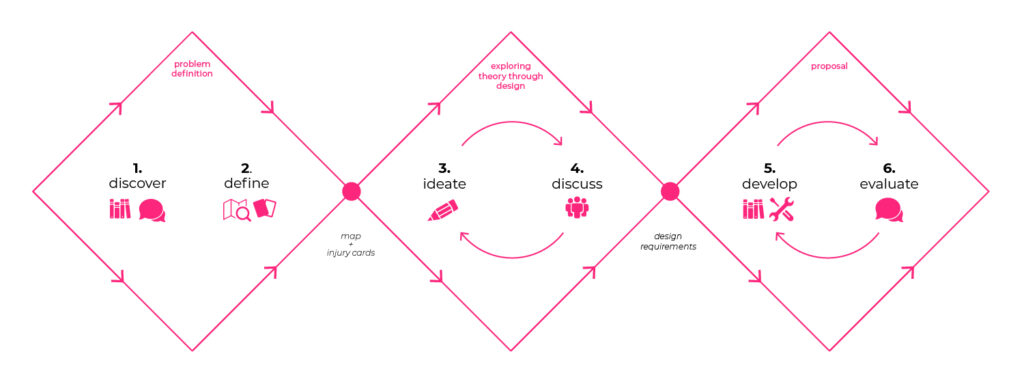
I used a Research through Design approach, through six iterative phases.
1. Discover
To uncover the emotional stressors tied to modern dating, I conducted a 10-day diary study and follow-up interviews with 13 singles.
2. Define
I turned user experiences and insights into a Map of Emotional Injuries and a set of Injury Cards. These depict and categorise common problems people have during online dating, together with opportunities and underlying needs to be fulfilled in those moments of pain – based on the Thirteen Fundamental Psychological Needs by Desmet & Fokkingha (2020).
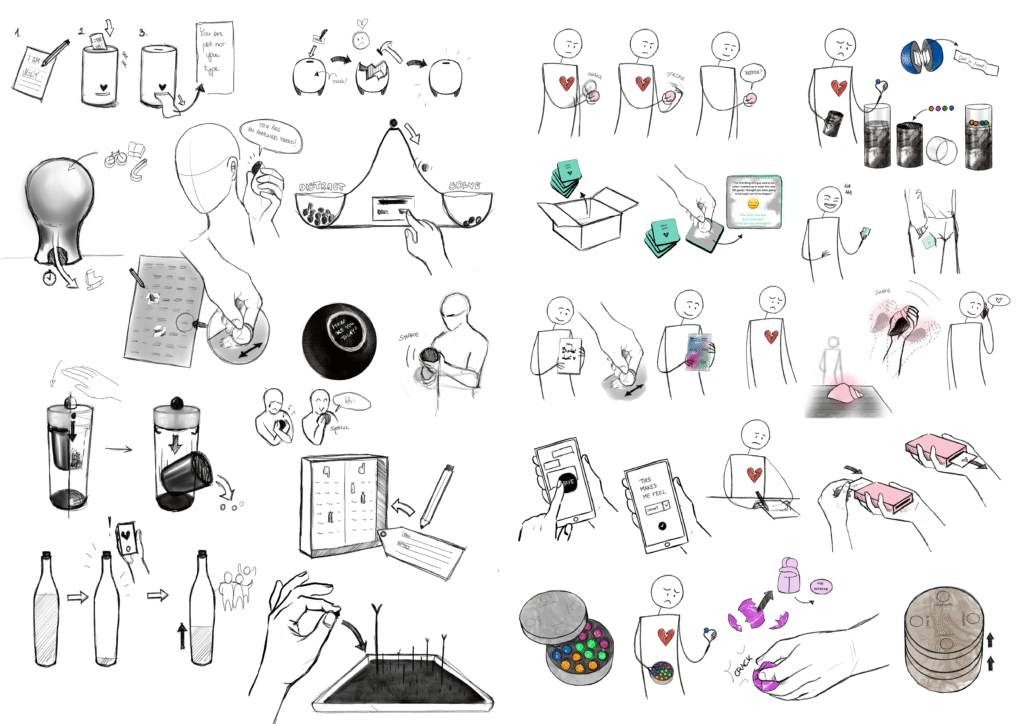
3. Ideate
Using the map and cards as the starting point, I came up with a wide range of playful, reflective and supportive ideas.
4. Discuss
Experts in social psychology and the dating industry evaluated promising ideas during a series of online group sessions. Together, they defined key design principles and recommendations such as self-compassion.
5. Develop
Drawing on these new insights, I created Huggle: a tactile ‘first-aid kit’ containing both reflective and practical prompts that people can consult in times of hardship.
6. Evaluate
Huggle was tested in a simulated setting and with dating app users in real life over a period of ten days. Participants recorded their experiences in diaries, revealing how the tool supported reflection and emotional regulation, as well as validating the design principles for transforming psychological methods into tangible products.
Results
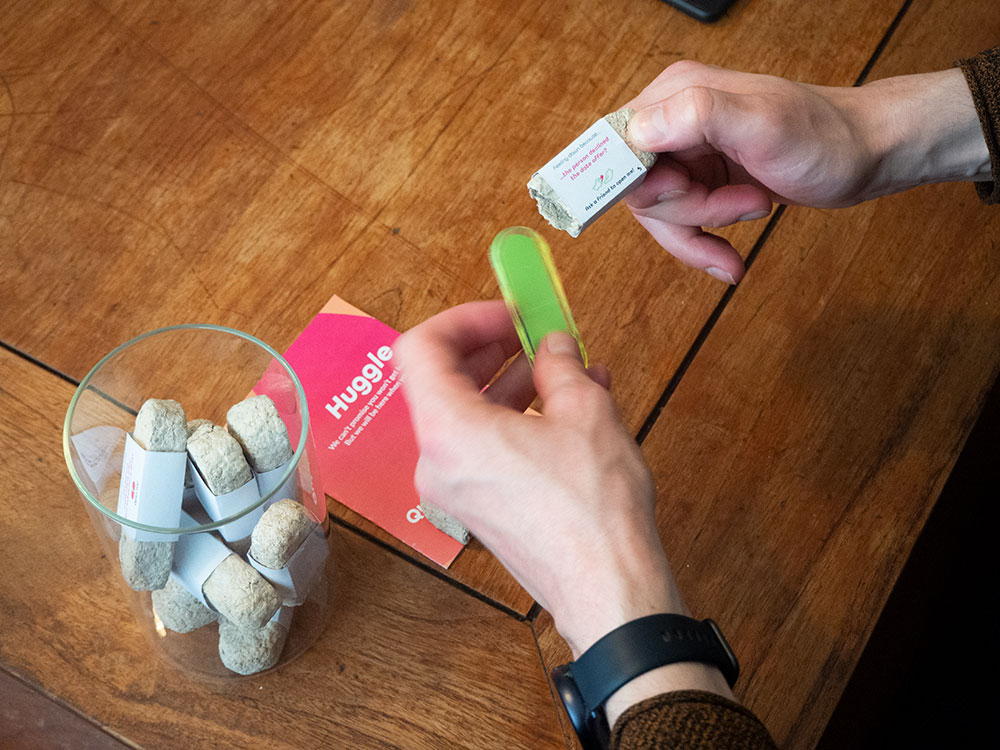
Huggle is a fictional addition to the Tinder ecosystem, offering users a tactile way to support themselves during minor emotional lows. The pill-shaped prompts, each containing a message promoting self-compassion, can be unwrapped during difficult moments (e.g. after being ghosted), encouraging ritual, reflection and resilience. The colourful ‘pills’ are designed to serve as visible reminders to be kind to ourselves during difficult times.
However, Huggle is not intended for the market. It is a research prototype demonstrating how abstract psychological strategies can be transformed into tangible design interventions.
Benefits
- A set of design principles – guidelines for designers working with the promotion of emotional well-being in mind.
- Insights into dating-related emotional needs, relevant for digital service providers and mental health professionals alike.
- Recommendations for the online dating industry around the emotional responsibility of their platforms.
Reflection
This project taught me how to translate complex emotional theory into approachable, human-centred design. I also developed my prototyping skills by working with laser cutting and digital prototyping. The most powerful part of the process was hearing people’s genuine stories about dating. This taught me a great deal about dating and romantic relationships and helped me to gain perspective on my own experiences. If I were to continue, I would invest more in improving the digital experience by exploring ways to seamlessly incorporate self-compassion into everyday interactions directly within the app.
More about this project
Read the full final report on the TU Delft repository
Read the article about Huggle in the Journal of Positive Design (English translation from Dutch):
Read the article: Hajdu, E., Ertürkan, H.,and Desmet, P. (2023) Introducing the third space of design for well-being: Exploring the intersection between problem- and possibility-driven design through a design case on online dating experience, in De Sainz Molestina, D., Galluzzo, L., Rizzo, F., Spallazzo, D. (eds.), IASDR 2023: Life-Changing Design, 9-13 October, Milan, Italy. https://doi.org/10.21606/iasdr.2023.513