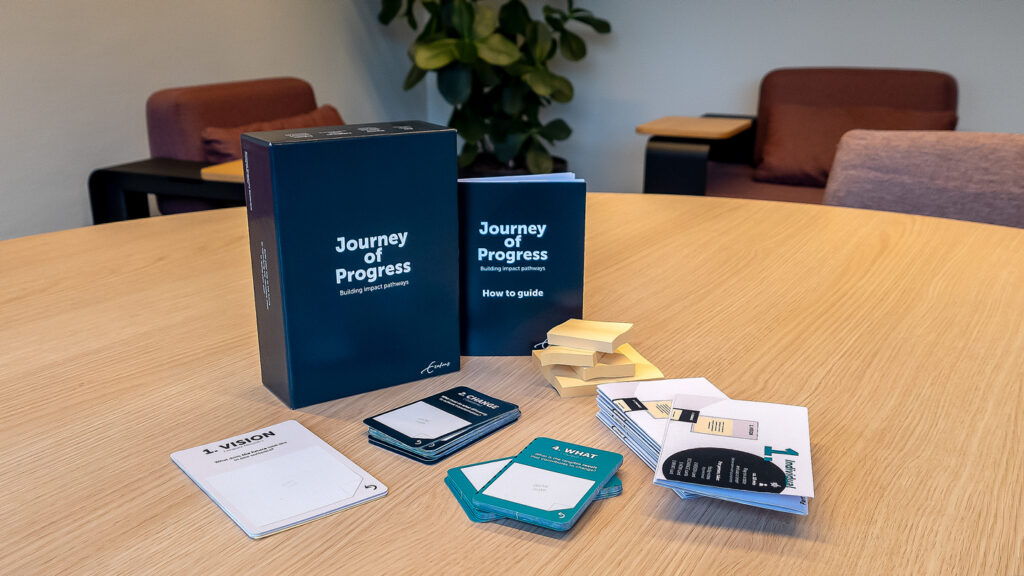
Building impact pathways through collaborative play
Theories of Change is a frequently used method for planning and evaluating the societal impact of projects and initiatives. Even required by funders across Europe. However, the method can be complex and deeply time-consuming.
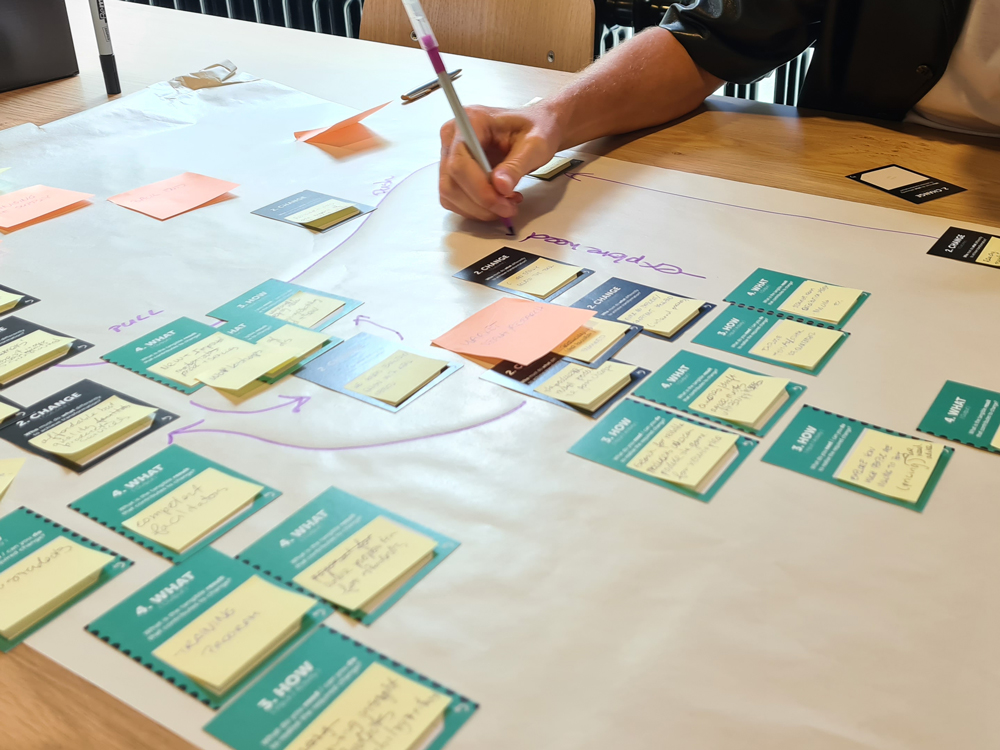
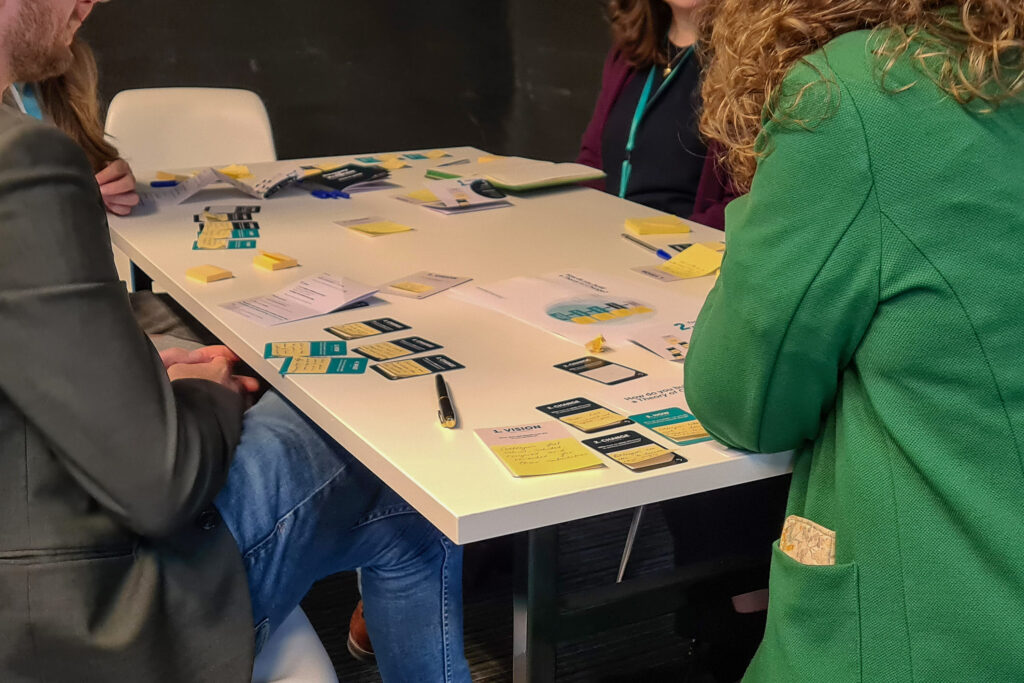
The Journey of Progress card set is as an alternative to traditional workshops full of jargon and dry content. It helps groups to collaboratively map out pathways from their desired future goals to concrete actions. Faster results, balanced participation and better alignment across stakeholders, all in under one hour.
Context
During my time as a Design Researcher on the Evaluating Societal Impact strategic project at Erasmus University Rotterdam, I led the development of this card set with the aim of making impact evaluation methods more user-friendly.
Contributors
- Dr Stefan de Jong (EUR)
- Dr Giovanna Lima (EUR)
- Dr Bianca Langhout (EUR)
- Lisa Burghardt (EUR)
- Pablo Ortiz de Zalumbide (EUR)
Approach & Methods
- Gamification
- Desk research (literature research and competitor analysis)
- Shadowing and Observing (visiting regular Theory of Change workshops)
- Iterative prototyping and testing with target users
- Qualitative evaluation (following customer data)
Tools
- Miro (for structuring and analysing information)
- Adobe Illustrator and InDesign (game design and production)
The process
This project started with a request:
Can you deliver a Theory of Change workshop in less than an hour?
This seemed impossible years ago, because this method is so complicated. But people still needed shorter, more interesting ways to devise plans and ambitions for their societal impact.
I began with following a senior colleague to his workshops to see how things were done. What do people focus on? What do they struggle with? I learned about the method and what other practitioners are doing through literature study, as well as comparing other tools and techniques.
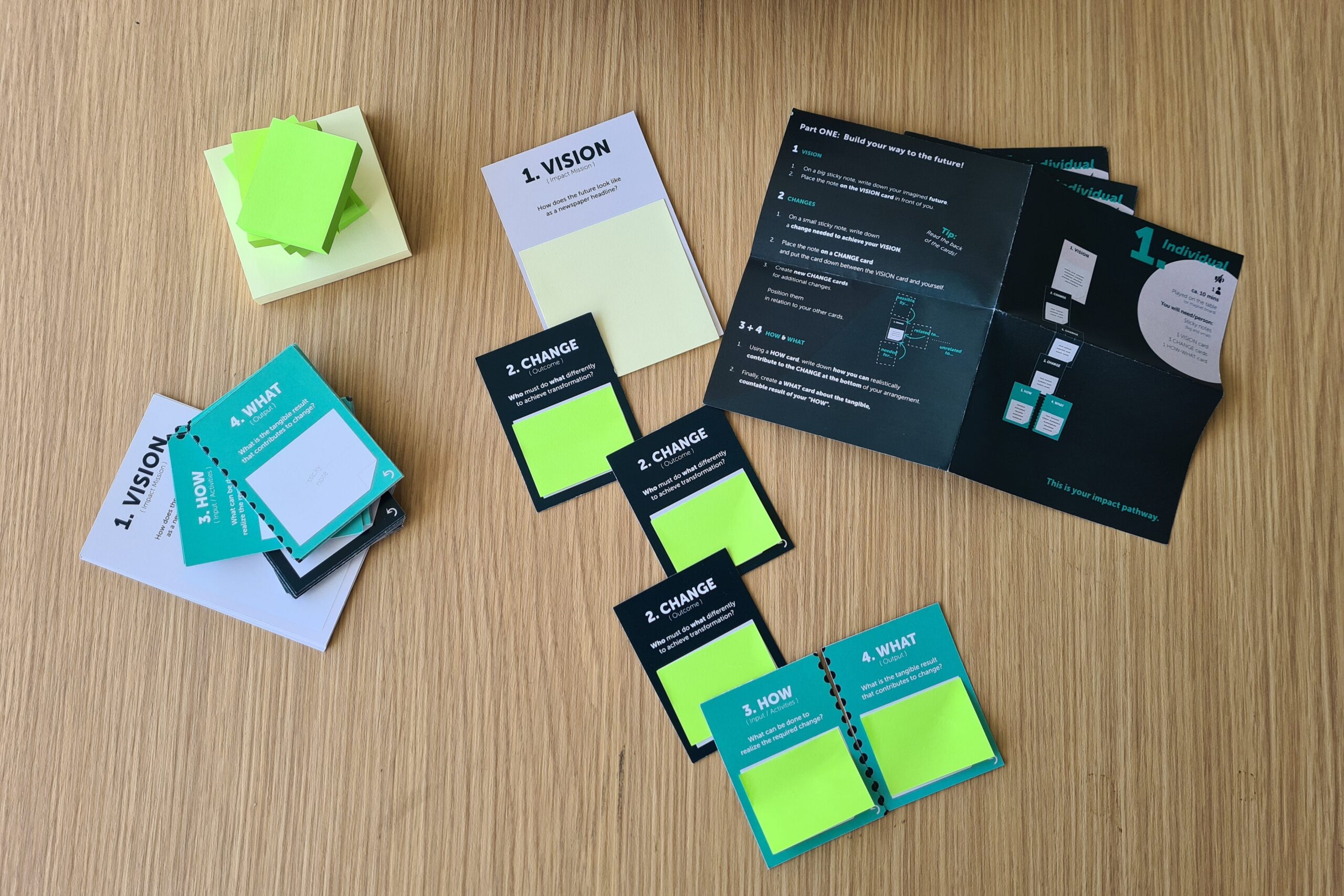
I was inspired by recent examples of serious games in universities. So I sketched out ideas for cards and game processes of a ’Theory of Change game’ in Miro. Together with colleagues, we kept trying to work out what language and visuals to use; making the complex jargon more accessible, but still relevant to the academic target audience and their different applications.
Through prototyping, trying out some quick and simple paper versions within our own department I worked out out how long things would take, what the steps were, and what instructions help players the most.
We shared the game with more and more people; with research projects, student groups and entire departments doing their strategic planning. Journey of Progress was meant to be used without any knowledge of the Theory of Change method. However, our experiences showed that people need to understand the method before they play. These were interesting dilemmas: Could we give people just enough information without overwhelming them? What’s the best time to do so?
I wrote the script for and coordinated the recording of two supporting videos: one on the method, and one about the game. A short guide was also added to the box to help project managers (or ‘game masters’) introducing Journey of Progress in their teams where I also took care of the design and layout.
Results
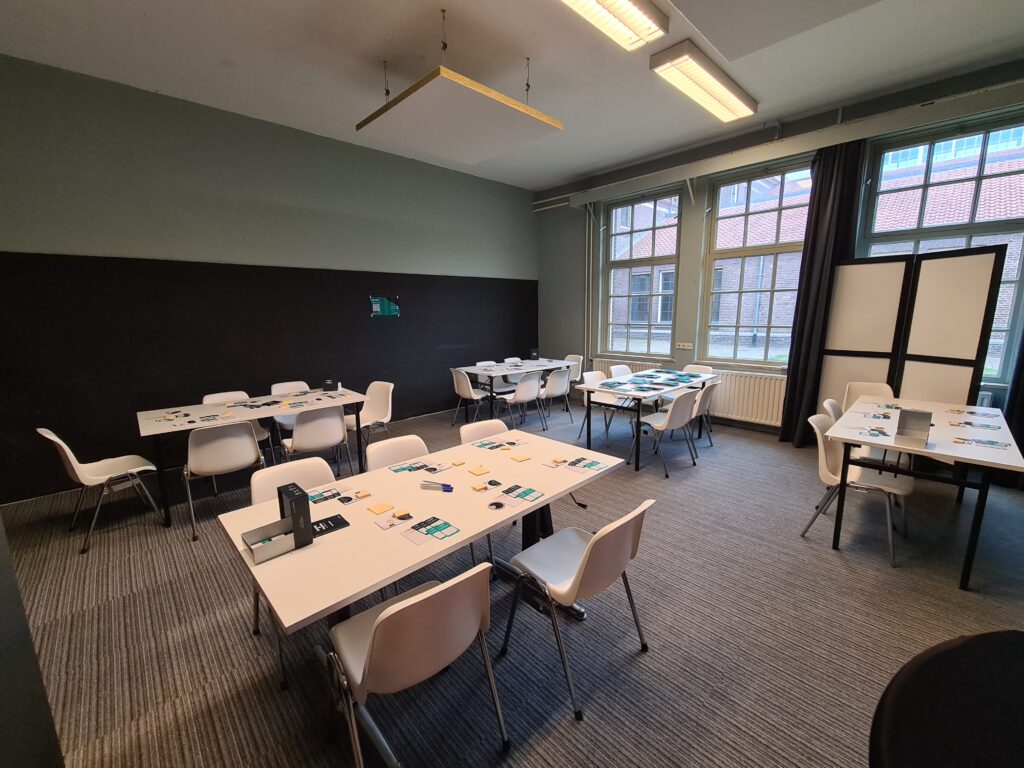
After making lots of small changes to balance feasibility requirements and user needs, now more than 300 boxes of Journey of Progress are being used in over 120 organisations in 20 different countries. I regularly deliver sessions with the games myself, enabling more and more people to experience a fast and collaborative way to plan their societal impact.
Benefits
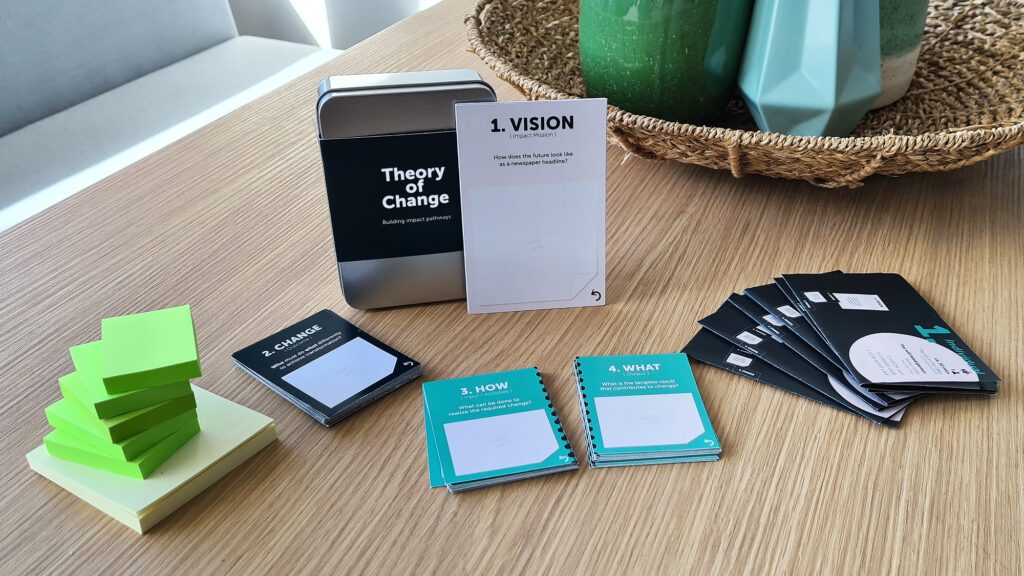
Tangible benefits; time & cost efficiency, flexibility, and autonomy. Results in 40 minutes instead of the usually required min. three hours. Enhanced engagement & equity, empowering quieter participants and overcoming power imbalances by structuring individual input and group discussion. Adaptability across sectors ranging from higher education institutes and research organisations to funders, societal and government organisations.
More about this project
See the official webpage of Erasmus University Rotterdam, where you can order your own copy:
Read the article about the game in the Austrian fteval journal (Conference Proceedings ReValuation 2024).
Not a fan of reading? Here is a podcast episode about Journey of Progress (ReValuation Podcast, Plattform fteval).