Enabling a participatory process in academic strategy development
As academic institutions increasingly prioritise their societal impact, many struggle to define, structure and align their ambitions.
I designed a series of participatory workshops to support faculties and departments in crafting their impact strategies.
This workshop setup offers a clear framework and ready-to-use materials. It helps you translate diverse perspectives into actionable pathways and identify the organisational structures necessary for enabling and strengthening positive societal impact.
Context
During my time as a Design Researcher on the Evaluating Societal Impact strategic project at Erasmus University Rotterdam (EUR), we supported the (impact) strategy development of various EUR schools.
Contributors
- Dr Giovanna Lima (EUR)
- Mariela Miranda van Iersel (EUR)
- Latiffah Salimah Baldeh (EUR)
- Tatiana Abi Aad (EUR)
- Nevien Kerk (EUR)
- Shelby Sissing (EUR)
- and members of multiple EUR schools.
Approach & Methods
- Co-creation
- Usability testing
- Graphic design
Tools
- Adobe Acrobat, InDesign, Illustrator
- Microsoft Office Word
The process
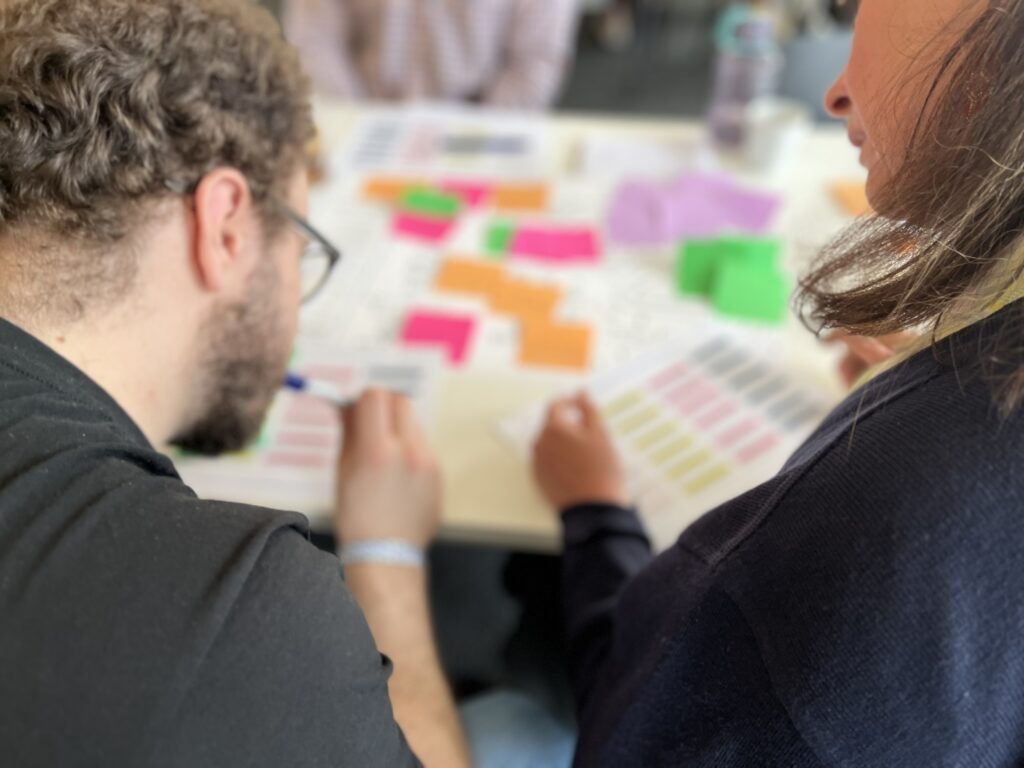
How can we make sure that institutional strategies are based on the community’s strengths and wishes? We start by asking the community.
Our team organised workshops, world-cafe’s and walk-in hours to understand how academics and professional staff make impact, and where they see themselves (and their faculty) on the long run. My role was to provide inviting and interactive materials for these sessions. The “catch” was that the facilitation would be done by someone else in the project, and probably by people from the faculties themselves. So, the materials needed to be clear and easy to understand.
I started making different cards and templates based on information from our faculty liaison. The first materials were used in a session with the Erasmus School of Economics. This provided valuable feedback on the language and the timing and spacing of the exercises during the workshop.
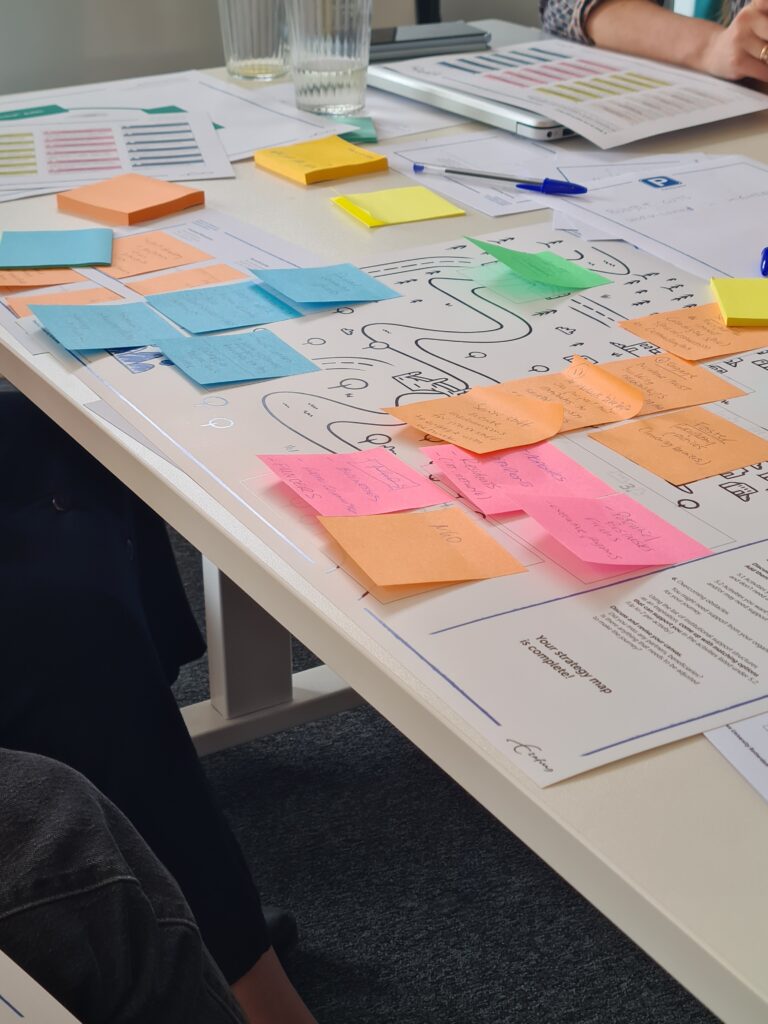
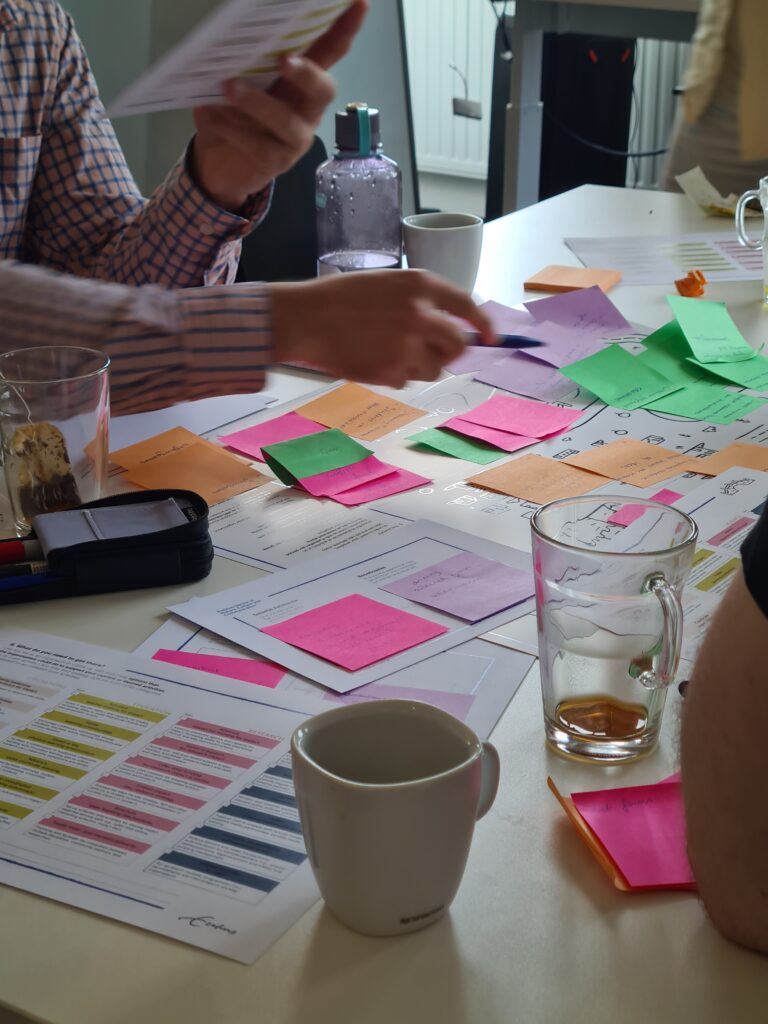
Within half a year, we got the chance to use the materials with the Erasmus School of Health Policy and Management. The scope of the workshops changed and we had a better understanding of impact strategies as well. We included ‘inspirational material’ in the setup to help people come up with new ideas. A list of possible activities that could have an impact, and of ways the organisation can support those activities, was presented. This opened up possibilities for the participants.
The third version was made when working with the Erasmus School of History, Culture and Communication. Earlier feedback and new wishes were a source of new ideas. All tasks needed to be completed in a two-hour workshop, but there were so many! So, we needed to combine what we could: This is how the ‘Strategy Map’ was created: an landscape with step-by-step instructions, allowing groups to see the most important elements at once.
But what happens to people’s contributions? In reality, faculty leadership cannot fulfil every wish – and they have to make hard decisions. A second, follow-up workshop was designed to help a group of people prioritise, and define necessary strategic actions. We describe the two sessions (the first focusing on community engagement and the second on decision making) in one single tool package.
Results
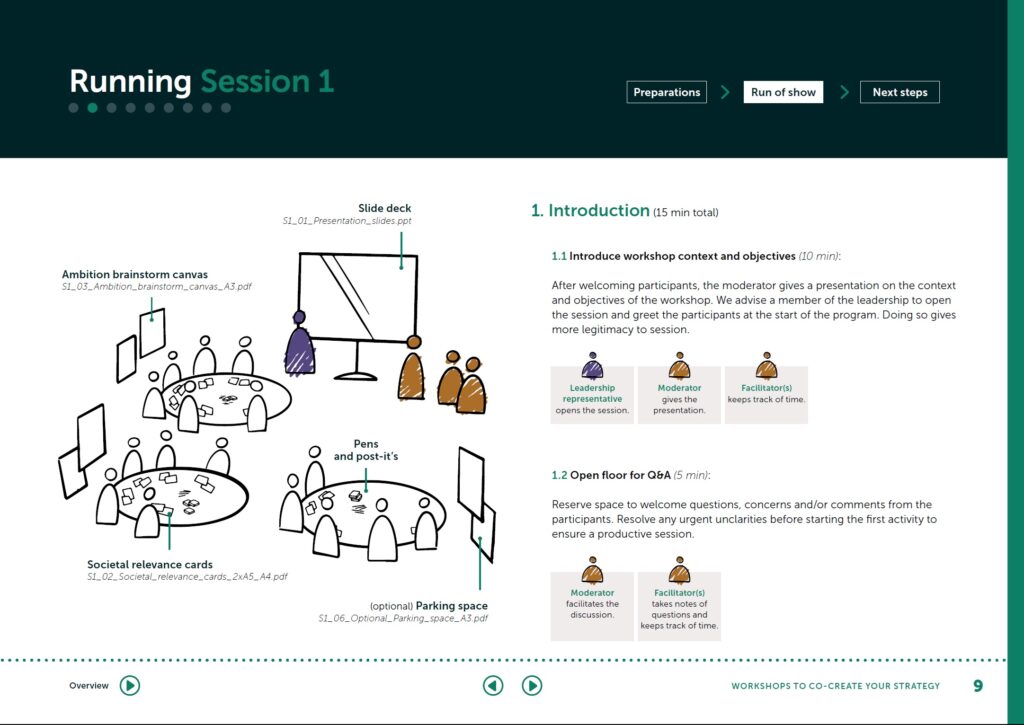
The tool Impact Strategy Development: Workshops to co-create your Strategy was developed as part of the broader Impact Strategy Development Toolkit. It was created to address the need for inclusive and research-based strategy development in academic institutions and helps to map ambitions, activities, and impact pathways.
The package contains:
- a guide describing the workshops;
- presentation slides to support the sessions;
- a ‘run of show’ to help the moderator;
- printable templates and workshop materials.
I was responsible for the concept, graphic design and layout, including interactive elements.
Benefits
This tool empowers teams to develop more grounded and actionable impact strategies by engaging with those closest to the work: researchers, educators and professional staff. The process helps to identify shared values, clarify long-term goals and align local ambitions with institutional capabilities. When used alongside other data collection methods, the insights gained from workshops contribute to the development of more robust, community-owned strategic frameworks. The result is a strategy that is not only more resilient, but also one that fosters a stronger sense of collective ownership and direction.