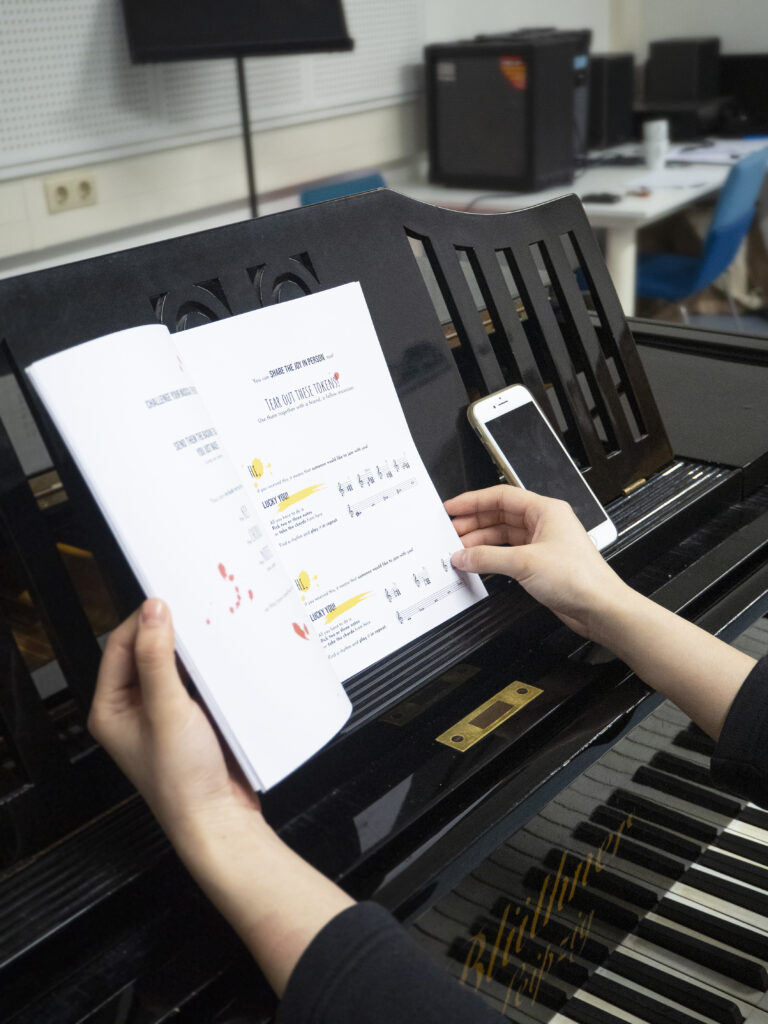
Helping classical musicians loosen up, improvise and jam more
Many classical musicians dream of playing freely with others, but the idea of improvisation can be intimidating, particularly given the high expectations and rigid training in their field.
For this exploratory solo project, I set out to understand why jamming feels stressful, and how design could help change that perception. The result is a playful, low-pressure practice book designed to boost classical musicians’ confidence in improvisation, making jamming feel like fun, not fear.
Context
In the Masters course Exploring Interactions at the Delft University of Technology, students were invited to explore a chosen topic. I decided to look into the art of ‘jamming’ – doing musical improvisation together with others.
Contributors
- Derek Lomas (coach, TU Delft)
- Marise Schot (coach, TU Delft)
- Ludo de Goeje
Approach & Methods
- Literature review on improvisation, learning, and performance anxiety
- Observations & researcher introspection
- Semi-structured interviews (21 musicians, 3 music teachers)
- Experience Prototyping
- Co-creation techniques (e.g., problem canvas, concept speed-dating)
- Usability and user testing
- Surveys (digital + print)
- Qualitative & quantitative data analysis
Tools
- Adobe Illustrator, InDesign, Premiere Pro
- Google Forms
- Wix
The process
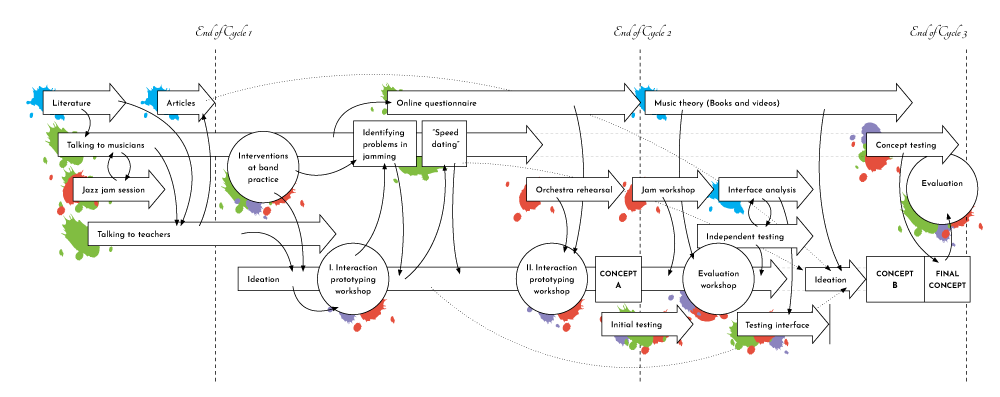
I followed a flexible, exploratory process in three stages:
Discover, Deepen & Ideate and Refocus & Deliver
Cycle 1: Discover
I immersed myself in the world of musical improvisation through interviews, observations, and literature research to identify potential barriers around jamming. This exploration revealed a lot of differences when it comes to musicians who have been trained in a classical way, showing that they are afraid of improvising, even when they have an otherwise high skill level.

Cycle 2: Deepen & Ideate
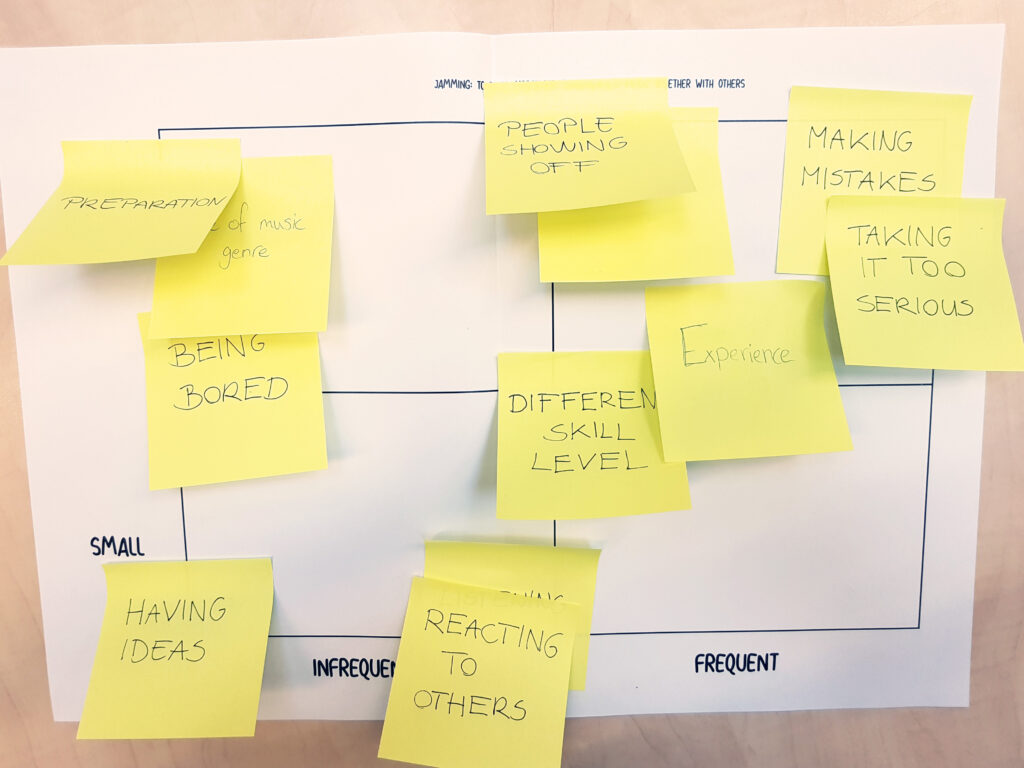
I developed multiple concept directions, testing ideas and deepening my insights through creative interventions such as experience prototyping and problem canvassing. These insights were continuously refined based on feedback from peers and musicians.
Cycle 3: Refocus & Deliver
Based on all the insights I had gathered, I came up with the idea of designing a portable looping device – a speaker that could randomly play backing tracks. However, after conducting initial tests and receiving feedback on rapid prototypes, I reached a dead end. There were many issues with the feasibility and desirability of this product idea.
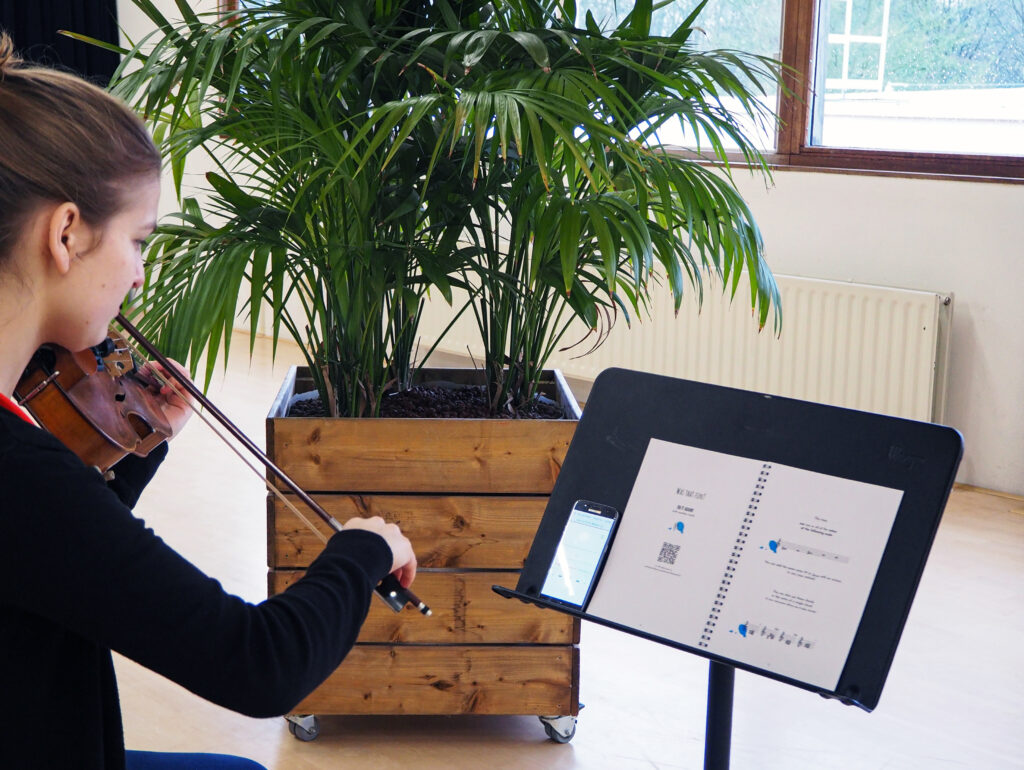
So an alternative idea was born: Not a Music Theory Book. This booklet is designed to look and feel different from the usual practice book and is filled with a series of guided exercises. The experience includes online practice tracks that users can access via their phone by scanning the respective page.
I tested and evaluated the product with musicians. Both qualitative and quantitative feedback was gathered, showing an increase in positive attitudes towards jamming.
Results
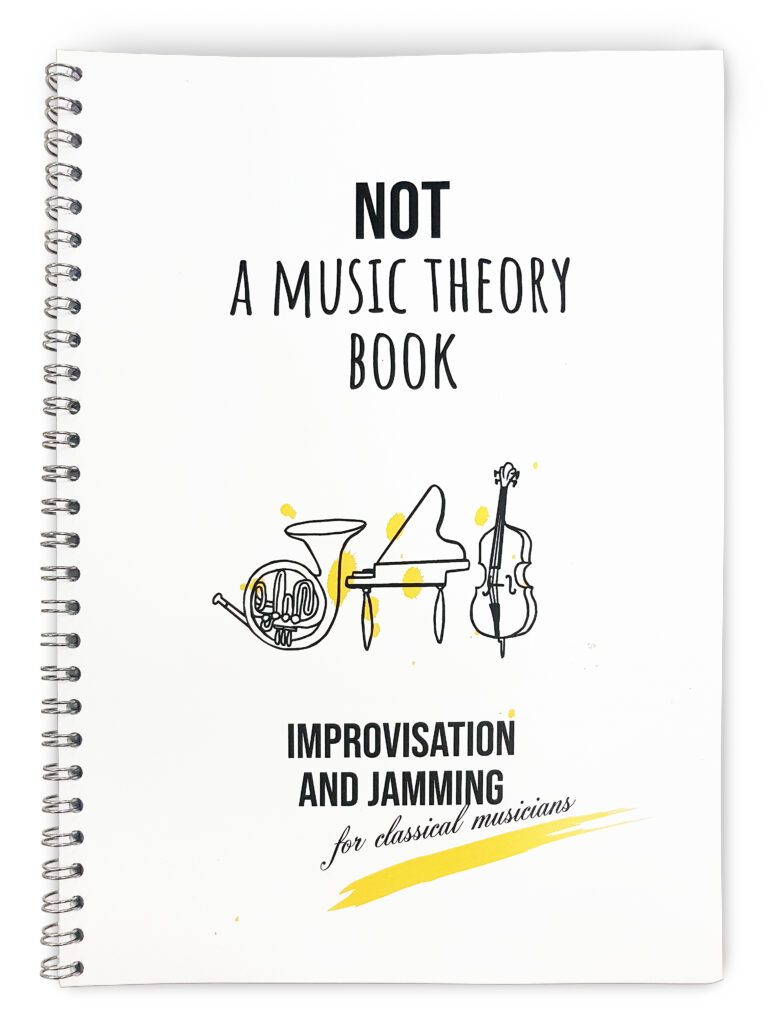
Not a Music Theory Book is a printed practice book containing short improvisation exercises designed for intermediate and advanced classical musicians. It is supplemented by an online database of looping backing tracks for solo practice.
As for the whole product development process, I was also responsible for the design, layout and visuals of the booklet.
Benefits
By rebranding jamming as light-hearted, personal exploration rather than high-stakes performance, the project encourages more classical musicians to engage in creative collaboration, and to rediscover the joy of simply making music.
More about this project
See the final video showing the booklet in use.
When scanning the exercise on a page, the musician is directed to the respective ‘backing track’.